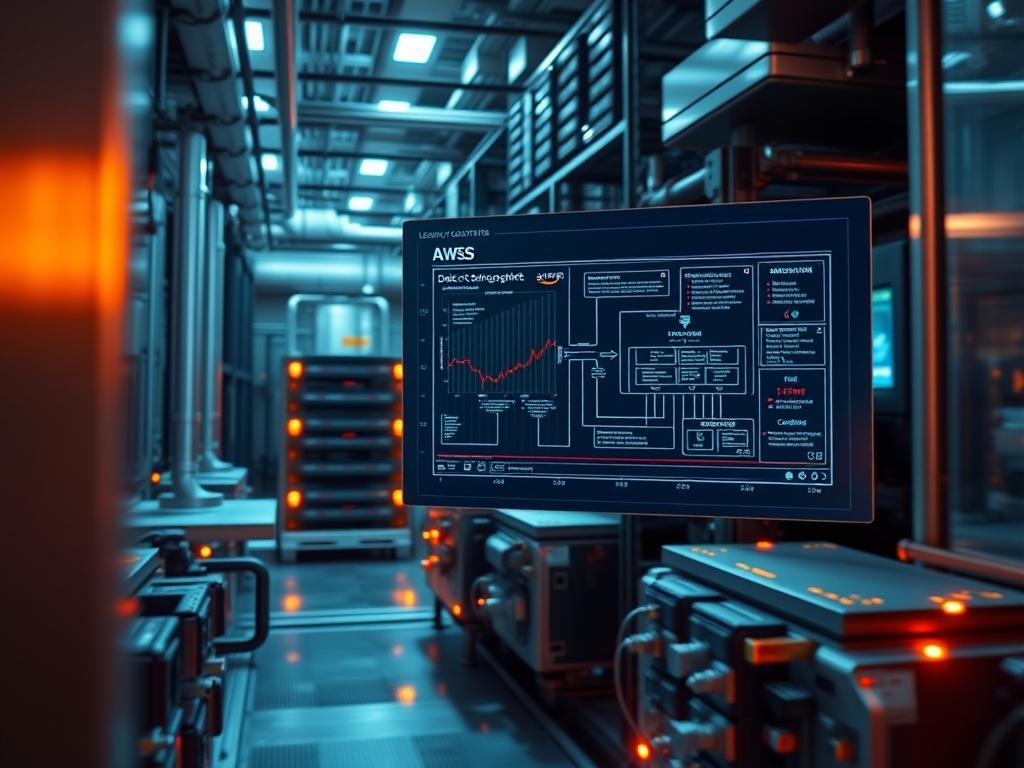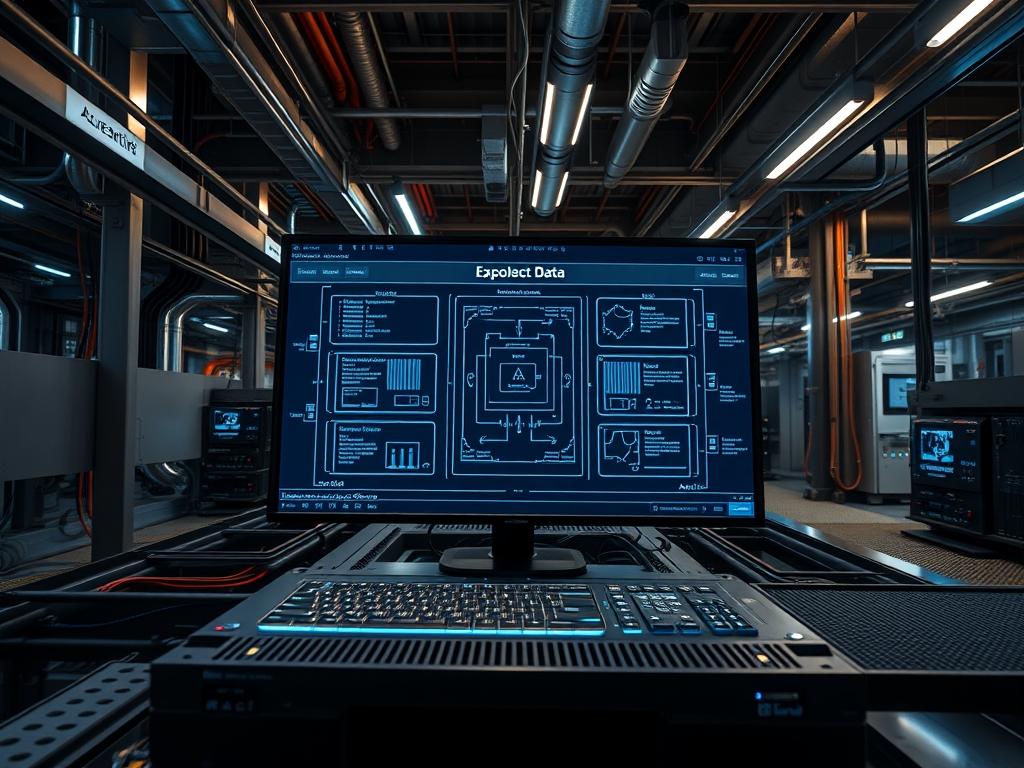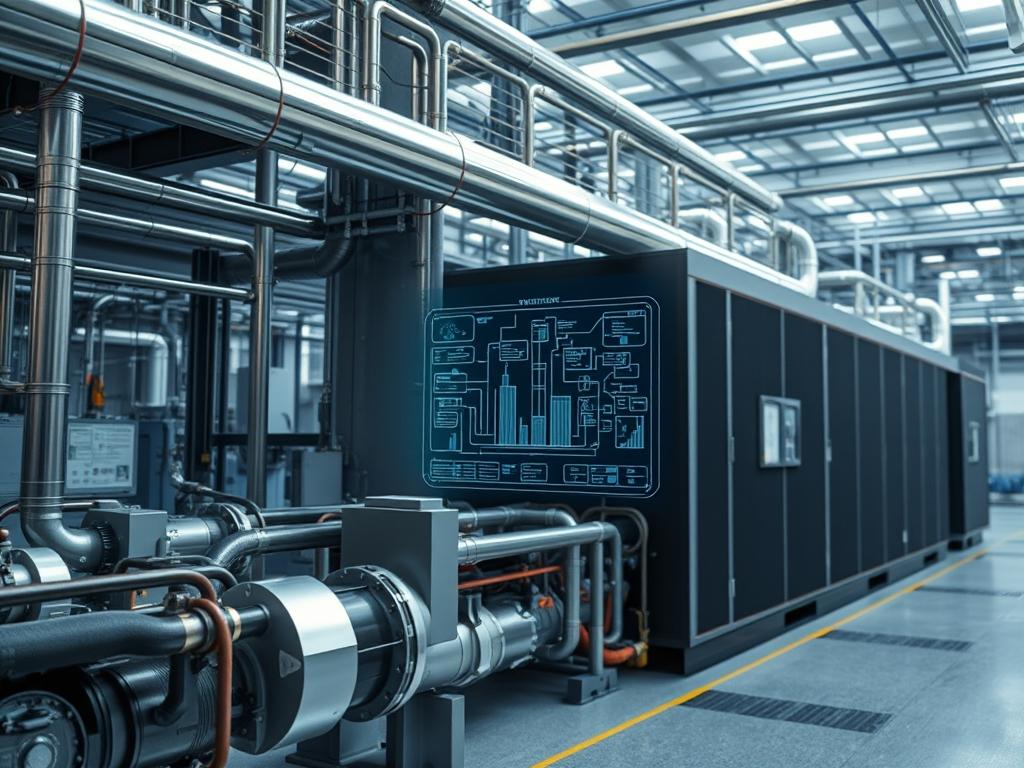
Chiller plant energy usage represents the single largest operational expenditure within modern mission-critical facilities; such as data centers, hospitals, and high-density industrial complexes. As a lead systems architect, managing this energy profile requires a deep understanding of the thermal-inertia inherent in large-scale cooling systems. The primary metric for efficiency is the Coefficient of Performance (COP); which is defined as the ratio of cooling energy provided to the electrical energy consumed. In practice, this serves as a baseline for measuring the optimization of the hardware stack against environmental heat loads. The problem faced by most facility engineers is a lack of granular visibility into the real-time energy payload. Without precise instrumentation and software-defined control logic, chiller plants often operate at sub-optimal levels; leading to significant financial overhead and increased risk of equipment failure due to thermal stress. This technical manual provides the framework for monitoring, reporting, and optimizing energy consumption through a combination of physical sensing, industrial communication protocols, and idempotent configuration management.
TECHNICAL SPECIFICATIONS
| Requirement | Default Port/Operating Range | Protocol/Standard | Impact Level (1-10) | Recommended Resources |
| :— | :— | :— | :— | :— |
| Power Metering | 0 TO 10,000 kW | Modbus TCP/IP | 10 | Class 0.1s Meter |
| Water Flow Rate | 2 TO 12 FPS | BACnet MSTP | 8 | Ultrasonic Flow Meter |
| Temp Sensors | 32F TO 100F (0.1F precision) | 4-20mA / 0-10VDC | 9 | Platinum RTD (PT100) |
| Controller CPU | 800MHz Minimum | ARM Cortex-M4 | 7 | 1GB RAM / 8GB eMMC |
| Network Latency | < 50ms | IEEE 802.3 | 6 | Cat6a Shielded |
| Data Persistence | 1-year retention | PostgreSQL/InfluxDB | 8 | 2x 500GB SSD (RAID1) |
THE CONFIGURATION PROTOCOL
Environment Prerequisites:
Successful deployment requires strict adherence to international standards and system dependencies. Physical infrastructure must comply with ASHRAE 90.1 for energy efficiency and NEC Article 440 for electrical safety. On the software layer, ensure the host gateway is running Ubuntu 22.04 LTS or an equivalent industrial Linux distribution. All field devices (chillers, pumps, and cooling towers) must expose their registers via Modbus or BACnet protocols. User permissions for the monitoring interface must be restricted; use sudo for administrative tasks and specific Service Account IDs for automated polling processes.
Section A: Implementation Logic:
The engineering design centers on the mathematical derivation of COP. By capturing the temperature differential between the Chilled Water Supply (CHWS) and Chilled Water Return (CHWR); and multiplying it by the flow rate and the specific heat of water; the system calculates the instantaneous cooling load in Tons or kW. This value is then divided by the total electrical power consumed by the Compressors, VFDs, and Condenser Fans. The goal of this logic is to minimize the “lift” or the pressure difference between the evaporator and condenser. Lowering the lift reduces the work required by the compressor; thereby increasing the COP and lowering the chiller plant energy usage. High throughput of sensor data is essential to prevent latency in the control loops; which could lead to oscillating temperatures and inefficient staging of equipment.
Step-By-Step Execution
1. Provision Thermal Sub-Metering
Install Power Meters at the main distribution board feeding the chiller plant. Use Split-Core Current Transformers (CTs) to measure current flow without interrupting the circuit. Verify communication by checking the Modbus register map.
System Note: This action establishes the energy baseline at the physical layer. The MODBUS-GW service will translate these electrical signals into a digital payload for the centralized controller.
2. Configure BACnet/IP Gateway Interface
Access the local automation server and edit the configuration file located at /etc/bacstack/config.json. Define the Device_Instance_ID and the UDP_Port (Default is 47808). Use systemctl restart bacnet-service to apply changes.
System Note: This step enables encapsulation of building automation messages within standard IP packets. Proper configuration prevents signal-attenuation and ensures full visibility of chiller internal variables such as refrigerant pressure and suction temperature.
3. Establish Sensor Calibration and Polling
Calibrate the PT100 Temperature Sensors using a dry-well bath to ensure +/- 0.1 degree accuracy. Map these inputs to the controller logic. Set the polling interval to 5 seconds to capture transient spikes in thermal load.
System Note: High-frequency polling minimizes the lag between a physical temperature shift and the chiller’s response. This reduces the overall energy overhead by preventing the system from overshooting the setpoint.
4. Deploy the COP Calculation Engine
Execute the following script to initialize the calculation logic on the application server: python3 /opt/energy_mgmt/calculate_cop.py –chiller_id 01. Ensure the script has appropriate permissions using chmod 755.
System Note: This logic-controller processes raw sensor inputs to derive performance stats. It operates as a background service; ensuring that throughput of data is maintained even if the user interface suffers from intermittent packet-loss.
5. Initialize VFD Control Loops
Configure the Variable Frequency Drives on the secondary pumps to maintain a constant differential pressure of 12 PSI across the most remote cooling coil. Use the fluke-multimeter to verify the 4-20mA control signal from the BMS.
System Note: This physical logic leverages the Affinity Laws; where a small reduction in motor speed results in a cubic reduction in power consumption. This is the most effective method for driving down chiller plant energy usage during partial load conditions.
Section B: Dependency Fault-Lines:
Software-defined energy management is prone to library conflicts and sensor drift. If the libbacnet library version is incompatible with the gateway hardware; the polling service may enter a crash-loop. Mechanically; the primary bottleneck is often the scaling of heat exchanger tubes. Even a minor buildup of mineral deposits increases thermal resistance; forcing the compressor to work harder for the same cooling effect. This manifests as a steady decline in COP despite constant electrical input. Network-wise; high concurrency of traffic on a shared building network can lead to collisions; resulting in “stale data” warnings in the energy logs.
THE TROUBLESHOOTING MATRIX
Section C: Logs & Debugging:
When chiller plant energy usage deviates from the expected baseline; administrators must check the primary error logs located at /var/log/energy_monitor/error.log. Common error strings and their physical counterparts include:
– “ERR_COMM_TIMEOUT”: Indicates a loss of connectivity between the controller and the Modbus meter. Inspect the RS-485 wiring for loose terminations or ground loops.
– “VAL_OUT_OF_RANGE”: Occurs when a sensor fails; such as a thermistor shorting out. Cross-reference this with a manual fluke-multimeter reading at the sensor head.
– “COP_WARN_LOW_EFFICIENCY”: This is a logical threshold error. Check the condenser water temperature; high entering condenser water is the leading cause of low COP due to increased heat lift.
– “ID_0x04_SLAVE_OFFLINE”: A specific hardware fault in the Logical-Controller communicating with the VFD. Ensure the breaker for the VFD control transformer is closed.
Visual cues on the dashboard; such as a “flat-line” graph for power consumption while cooling load increases; typically indicate a stuck data point in the database buffer. Use systemctl restart influxdb to flush the cache and resume real-time updates.
OPTIMIZATION & HARDENING
– Performance Tuning: To maximize efficiency; implement “Chilled Water Reset” (CWR) logic. As outdoor air temperature drops; the system should automatically increase the CHWS setpoint. This reduces the compressor’s thermal-inertia and significantly lowers the power payload. For concurrency management; ensure the BMS Gateway is configured to handle at least 500 synchronous Modbus registers to prevent telemetry bottlenecks.
– Security Hardening: All energy monitoring hardware must be isolated on a dedicated Management VLAN. Implement IPtables rules to permit traffic only on specific ports (e.g., Port 502 for Modbus and Port 47808 for BACnet). Use strong; non-standard passwords for all BMS web interfaces. Ensure the physical cabinet for the PLC and Controller is locked to prevent unauthorized physical access to the serial ports.
– Scaling Logic: When adding a new chiller to the plant; the configuration must be idempotent. Use automated deployment scripts (such as Ansible playbooks) to push the identical configuration to the new BMS Controller. Scaling the storage back-end is also critical; as chiller plant energy usage data accumulates; the database must be partitioned by month to maintain query speed and low latency for the visualization head.
THE ADMIN DESK
Q: Why does my COP drop even when the load is high?
High loads often cause elevated condenser temperatures. As the pressure differential increases; the compressor requires more energy to reach the lift requirement. This additional overhead reduces the numerator in the COP equation. Check for condenser tube fouling immediately.
Q: How do I fix “Packet-Loss” on my RS-485 network?
Ensure a 120-ohm termination resistor is installed at both ends of the trunk. Verify that the shield is grounded at only one point to prevent ground loops. Check that the baud rate matches across all Modbus devices.
Q: Is there an idempotent way to reset controllers?
Yes. Use a scripted systemctl command sequence or a Cisco PoE port bounce if the controller is powered over Ethernet. This ensures the service restarts cleanly without leaving orphaned processes in the kernel memory buffer.
Q: Does thermal-inertia impact energy reporting accuracy?
Absolutely. Large volumes of chilled water act as a battery. It can take several minutes for a change in energy input to reflect in the cooling output. Always use an averaged COP over a 15-minute window for accurate reporting.