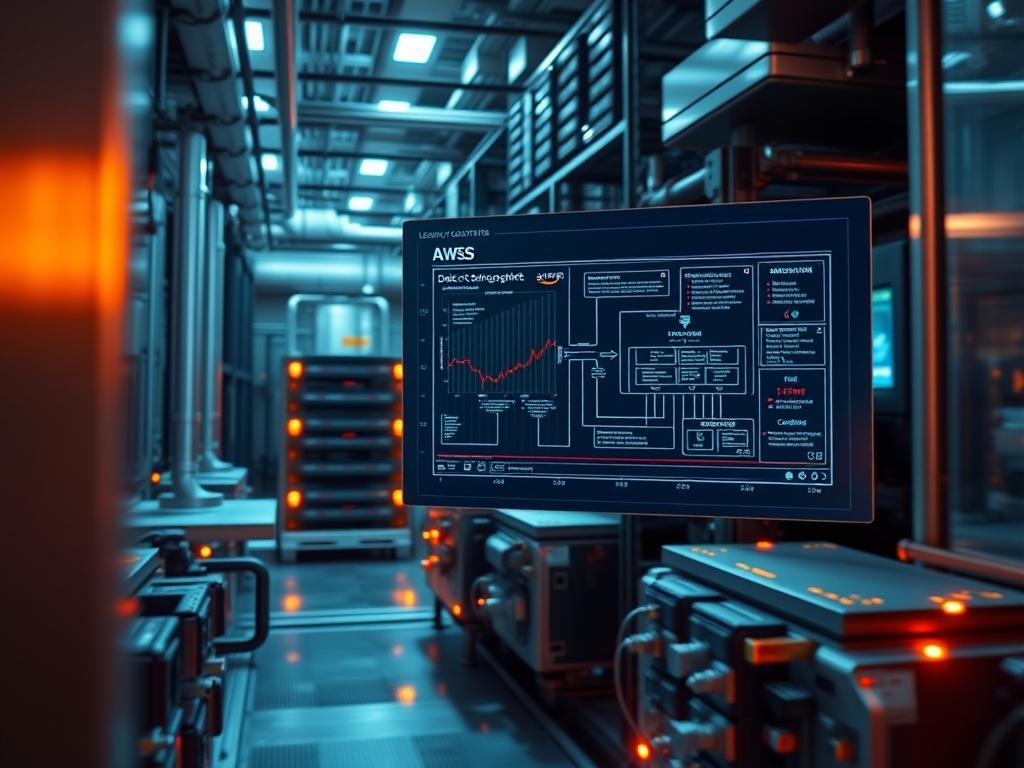
Data center heat rejection is the critical process of transferring thermal energy generated by compute cycles from the server room to the external environment. This mechanism preserves the operational integrity of the underlying technical stack: encompassing energy distribution; cloud availability; and network reliability. As silicon power density increases beyond 300W per socket; air cooling reaches its physical limit. The problem involves mitigating thermal-inertia within high-density racks; where stagnant air pockets lead to localized hotspots and hardware failure. The solution requires a transition to liquid-to-air exchange systems; which leverage the superior heat capacity of fluids relative to air. By implementing a Closed-Loop Liquid Cooling (CLC) or Rear Door Heat Exchanger (RDHx) architecture; operators reduce the overhead of traditional CRAC units. This manual details the metrics and deployment protocols for these systems to ensure maximum throughput and minimal latency in cooling response. Efficient heat rejection is not merely a utility requirement; it is a foundational SLA dependency for modern high-performance computing (HPC) environments.
Technical Specifications
| Requirement | Default Port/Operating Range | Protocol/Standard | Impact Level (1-10) | Recommended Resources |
| :— | :— | :— | :— | :— |
| Coolant Flow Rate | 1.5 – 5.0 GPM per rack | ASHRAE TC 9.9 | 9 | Grade 316 Stainless Steel |
| Supply Temp (W1-W5) | 2C – 45C (Facility Water) | Liquid Cooling Guide | 8 | 16GB RAM / Quad-core PLC |
| Monitoring Protocol | Port 161 (SNMP) / 502 (Modbus) | SNMPv3 / Modbus TCP | 7 | Category 6A Shielded Cable |
| Delta-T (Inlet/Outlet) | 10C – 20C Variance | ISO 14644-1 | 9 | High-Precision RTD Sensors |
| Heat Transfer Density | 10kW – 100kW per Rack | Thermal Guidelines | 10 | 1.5 inch PEX-AL-PEX Piping |
The Configuration Protocol
Environment Prerequisites:
Successful deployment of liquid-to-air exchange metrics requires adherence to specific infrastructure dependencies. The facility must comply with ASHRAE Class W1 through W5 water temperature standards to ensure hardware compatibility. Hardware must support IPMI 2.0 or Redfish API for granular thermal reporting. Software-defined power management tools must be at Version 4.0 or higher to support the idempotent application of thermal policies. User permissions require sudo access for Linux-based monitoring nodes and Administrator level privileges for Building Management System (BMS) logic controllers.
Section A: Implementation Logic:
The engineering design of liquid-to-air exchange centers on the principle of encapsulation of the thermal payload. Standard air-cooled systems suffer from low heat capacity; leading to significant energy overhead in fan power and chiller workload. By introducing a liquid medium at the rack level; we facilitate a high-concurrency heat transfer. The liquid absorbs the thermal energy directly from the heat source (the CPU/GPU) and transports it to a Heat Distribution Unit (HDU) or Rear Door Heat Exchanger. This reduces the reliance on massive air volumes; thereby decreasing the noise floors and the risk of signal-attenuation caused by vibration in ultra-dense storage arrays. We use a secondary loop to isolate facility water from the sensitive IT equipment; providing a fail-safe layer against contamination and pressure surges.
Step-By-Step Execution
1. Initialize Sensor Matrix and Hardware Probing
System Note: Before physical coolant flow is introduced; the underlying kernel must recognize all thermal sensors to prevent a runaway thermal-inertia event. Using sensors-detect on the monitoring node identifies the I2C and SMBus interfaces responsible for reporting temperatures.
sudo sensors-detect –auto
watch -n 1 sensors
This action ensures that the monitoring service has a direct line of sight to the motherboard’s thermal diodes and the coolant loop’s flow-meters.
2. Configure Modbus Gateway for Liquid Flow Metrics
System Note: The gateway acts as the bridge between the physical liquid loop and the digital twin in the BMS. Setting the correct IP and port is essential for preventing packet-loss in the telemetry stream.
vi /etc/modbus-gateway/config.yaml
Define the TARGET_IP as the PLC address and set POLLING_INTERVAL to 100ms to minimize latency.
systemctl restart modbus-gateway-service
By restarting the service; you commit the polling configuration; enabling real-time liquid-to-air exchange calculations.
3. Establish Thermal Throttling Thresholds in the Kernel
System Note: This software-level safeguard interacts with the intel_pstate driver or the amd_pstate driver to limit CPU clock speeds if the liquid loop fails. This provides a secondary layer of protection against hardware melting.
echo 85 > /sys/class/thermal/thermal_zone0/trip_point_0_temp
chmod 644 /etc/default/cpufrequtils
This command modifies the kernel’s response to thermal spikes; ensuring that compute throughput is sacrificed to maintain environmental stability.
4. Calibrate the Heat Distribution Unit (HDU) Pressure
System Note: Using a fluke-multimeter and a pressure transducer; the architect must ensure the pump’s output matches the design’s flow-rate requirements. Excess pressure can lead to seal degradation; while insufficient pressure causes vapor lock.
/opt/hvac-tools/set-pump-speed –rpm 3200 –zone 1
This specific command interacts with the logic-controllers to set a static baseline for the liquid-to-air exchange speed.
5. Validate SNMP Trap Destinations for Emergency Shutdowns
System Note: Cooling failures require near-instantaneous notification to the network operations center. Configuring SNMP traps ensures that the “Critical Overheat” payload is delivered even during high network congestion.
snmpset -v3 -u admin -l authPriv -a SHA -A password123 -x AES -X privacy456 192.168.1.50 1.3.6.1.4.1.2.1.1 s “Thermal Critical”
This command validates the ability of the system to send an encrypted emergency signal when thermal thresholds are breached.
Section B: Dependency Fault-Lines:
The most common bottleneck in data center heat rejection is the “Air-Liquid Bridge Failure.” This occurs when the heat exchanger coils become fouled by particulate matter or calcification; leading to a 30 percent drop in transfer efficiency. Mechanical bottlenecks often include pump cavitation; which happens if the system is not properly air-bled during the commission phase. Software conflicts frequently arise when the ipmitool version is incompatible with the server’s BMC firmware; resulting in “Null” or “NaN” readings for CPU temps. Always verify that the libmodbus library is up to date to prevent segmentation faults during high-concurrency polling operations.
THE TROUBLESHOOTING MATRIX
Section C: Logs & Debugging:
When the system detects a thermal anomaly; the first point of audit is the /var/log/syslog or the dedicated BMS event log located at /var/log/thermal/exchange.log. Look for error strings such as “DRV_FAULT” or “COMM_TIMEOUT.”
A “DRV_FAULT” on a pump controller often indicates a physical blockage or a blown fuse in the 3-phase power supply. If the sensors report a “COMM_TIMEOUT;” check the Category 6A cabling for signs of signal-attenuation or electromagnetic interference from nearby power distribution units.
Visual cues on the physical exchange unit are equally vital: a frosting on the return line indicates an over-active chiller loop; whereas a vibrating manifold suggests air encapsulation within the liquid loop. For sensor readout verification; use the path /sys/class/hwmon/hwmonX/tempY_input to compare raw kernel data against the GUI dashboard. If these values diverge; the abstraction layer or the visualization software is compromised and requires a service flush.
OPTIMIZATION & HARDENING
Performance Tuning involves adjusting the fan curves on the air-side of the exchange unit to find the “Sweet Spot” between acoustic noise and thermal throughput. By implementing a Proportional-Integral-Derivative (PID) loop in the controller logic; the system can respond to compute load spikes with minimal oscillation. This reduces power overhead by ensuring fans and pumps only run at the necessary speed to maintain the Delta-T.
Security Hardening must address both the digital and physical planes. Ensure all PLC and BMS interfaces are behind a dedicated management VLAN with strict firewall rules; only allowing traffic from authorized monitoring subnets. Disable all unencrypted protocols like Telnet or HTTP in favor of SSH and HTTPS. On the physical side; implement logic-controllers with “Fail-Open” or “Fail-Safe” states: in the event of a power loss; the secondary bypass valves should open to allow natural convection where possible.
Scaling Logic for heat rejection requires a modular approach. As more racks are added to the floor; the facility’s Primary Loop Capacity must be audited to ensure it can handle the increased thermal payload. Using a “Sidestream Filtration” system allows for the addition of new exchange units without shutting down the entire loop. This preserves the idempotent nature of the infrastructure; allowing for seamless expansion under high traffic conditions.
THE ADMIN DESK
How do I fix a ‘Pump Cavitation’ error?
Check the fluid levels in the expansion tank and ensure the air-bleeding valve is open. Cavitation occurs when air bubbles enter the pump; causing mechanical vibration and reduced throughput. Ensure the suction head pressure meets the manufacturer’s minimum requirement.
What is the ideal Delta-T for liquid cooling?
A Delta-T (the difference between supply and return temperatures) of 10C to 20C is typical. A smaller Delta-T indicates the flow-rate is unnecessarily high; while a larger Delta-T suggests the system cannot reject the thermal payload quickly enough.
Why are my SNMP traps not reaching the BMS?
Check for packet-loss on the management network or a mismatch in the SNMPv3 engine ID. Ensure that the firewall permits traffic on UDP Port 162. Verify the signal-attenuation levels on long copper runs between the rack and the controller.
How can I reduce the PUE overhead of the cooling system?
Optimize the liquid-to-air exchange metrics by raising the facility water supply temperature. Operating in the ASHRAE W4 or W5 range allows for “Free Cooling” using external dry coolers rather than energy-intensive chillers; significantly reducing the total power payload.
What causes ‘Signal-Attenuation’ in thermal sensors?
This is often caused by running low-voltage sensor wires parallel to high-voltage power lines. Use shielded twisted-pair (STP) cabling and ensure proper grounding to prevent electromagnetic interference from distorting the thermal data payload.